Summary:
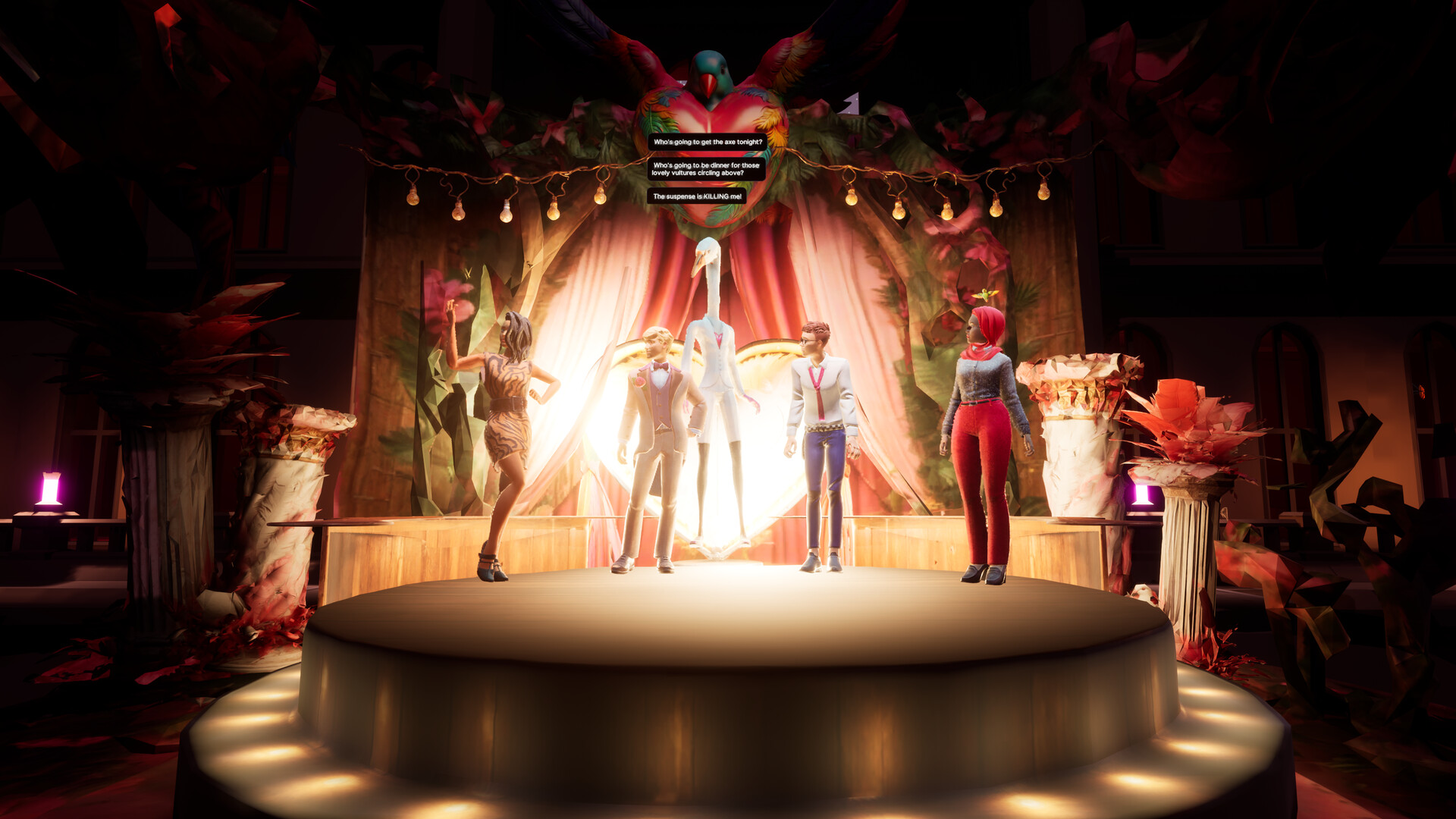
As an engineer my main work was in the FermataCore pluign that lets LLM-driven characters live inside our projects. The Delta System safely applies everything an LLM changes, and the LLM-driven animation system. Basically, the AI gets to improvise and the game stays under control.
1. LLM-Driven Animation System
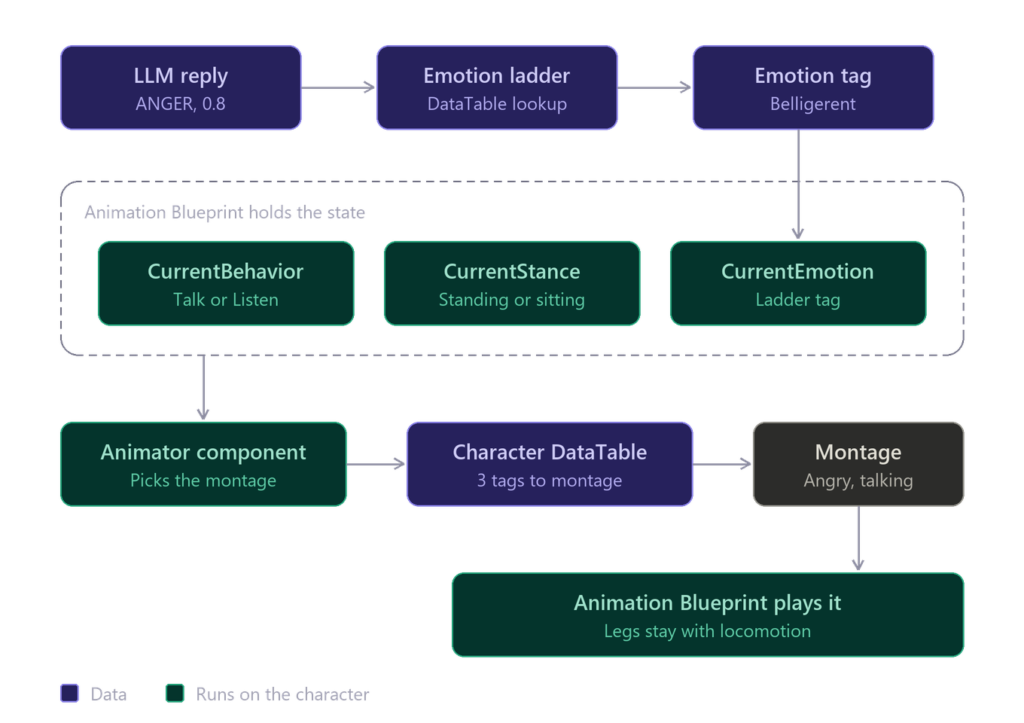
When an NPC speaks, the LLM returns an emotion label and an intensity along with its line. That data goes through four steps to decide what animation plays:
- An emotion DataTable turns the label and intensity into a gameplay tag (for example, ANGER at 0.8 becomes Belligerent).
- The ABP holds the character’s current state as gameplay tags: talking, listening, sitting or standing.
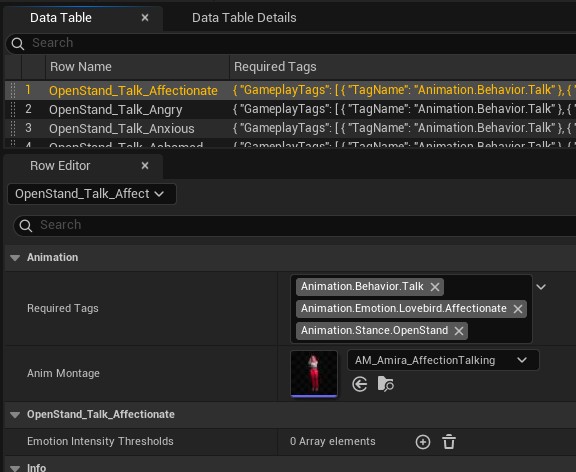
- The character’s own animation DataTable takes those three tags and returns a montage.
- The ABP plays the montage in its slot. While the character is walking, locomotion keeps control of the legs.
2. How LLMs Safely Change the Game: Delta System
Every change in the game, whether it comes from the LLM, a story beat or a designer, is a delta: a small record of who is affected, which property changes, and the new value. The system assumes the LLM is unreliable, so a delta goes through these steps:
- A source creates it. For example, an LLM reply includes character amira, property Emotion, value angry.
- It’s validated. The system checks that the character exists, the property is known etc.
- It’s applied or rejected. A batch is all or nothing, and every outcome is logged.
- It’s routed. Story deltas update the next prompt. Engine cues (camera, animation, VFX, audio) go to the system that handles them.
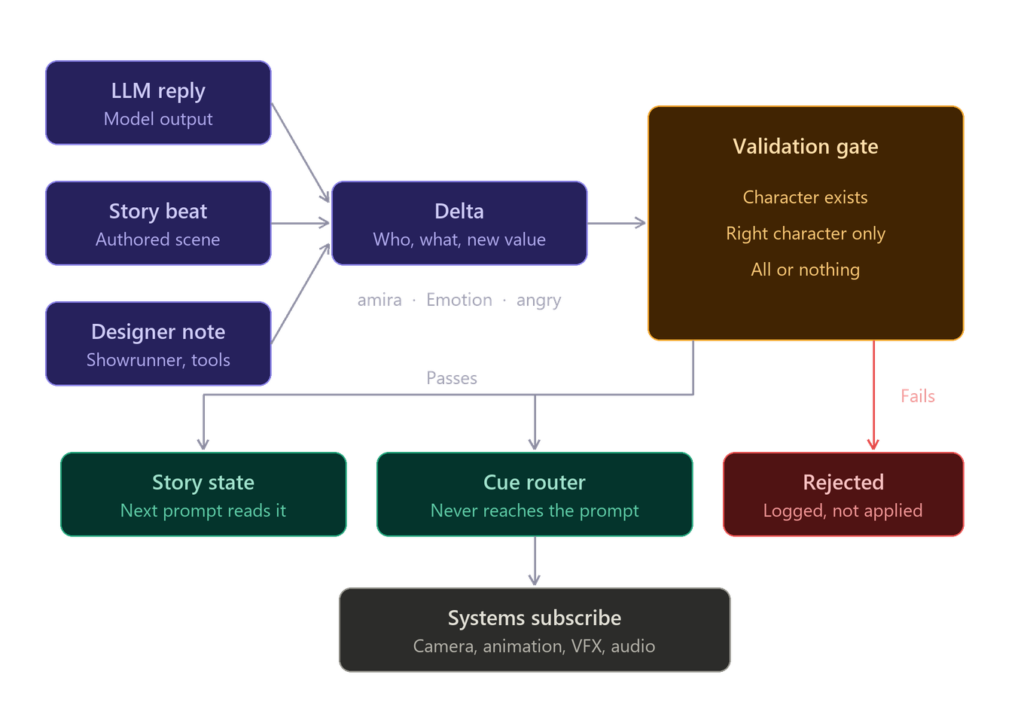
The main idea is that a Delta is a change driven by the LLM and the game state must understand and adapt to it.
3. Directing scenes like a movie director
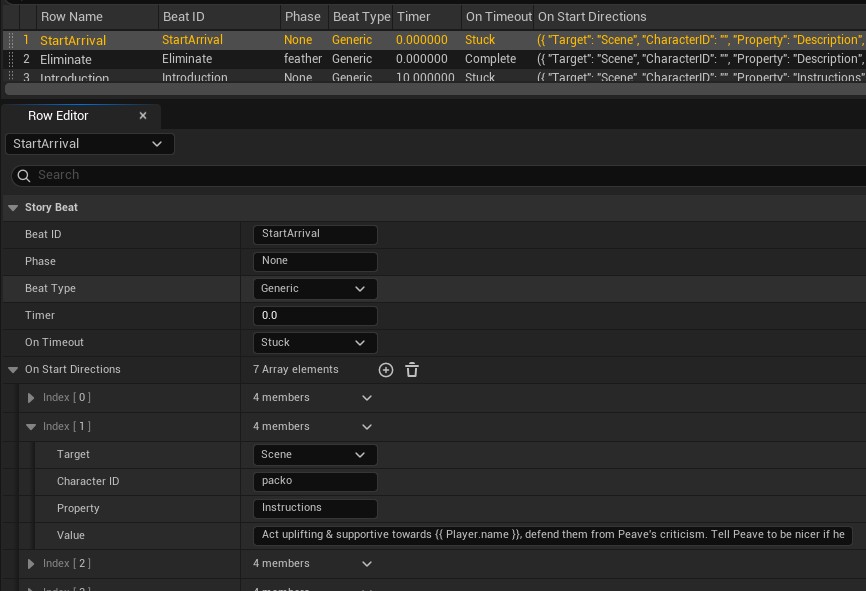
With our “storybeat system” designers direct a scene by editing a DataTable, using natural language to say give directions to NPC, what answers to accept, what to do if a player is stuck and gave something wrong. All this are combined in a prompt for those AI characters.
- Direct how a moment is played. A beat carries directions like “Amira is nervous and hiding something”, AI improvises outcome based on this.
- Script the lines that must be said. Where an exact line matters, a designer can write it word for word.
- Decide what answers to accept. A beat can ask the AI to judge the player’s reply and return an outcome.
- Decide what happens when the player gets it wrong. A wrong answer can trigger its own direction, like a character pushing back or a hint.
- Set the conditions to move on. A beat only ends when the designer’s condition is met, like a player action, an outcome, or something that already happened in the scene.